



The Atlantic crossing challenge remains a significant milestone, and the ARC and ARC+ rallies offer two distinct paths across the pond
Crossing the Atlantic in sailing yachts has been done for decades by those of an independent mindset; they just needed a boat seaworthy enough and capable of sailing the 2,700 miles from Europe to the Caribbean.
The dream of sailing the Atlantic has not diminished, and while yacht design has evolved significantly, the challenge of crossing the pond remains a significant milestone for many sailors. More and more are choosing to do so as part of a rally, with the World Cruising Club (WCC) providing the main two options, though other smaller or more race-focused rallies exist.
There are many different reasons to choose to join an ARC rally. For many it offers a level of reassurance, safety in numbers, and consolidated blue-water learning and support to prepare boat and crew for a first ocean crossing.
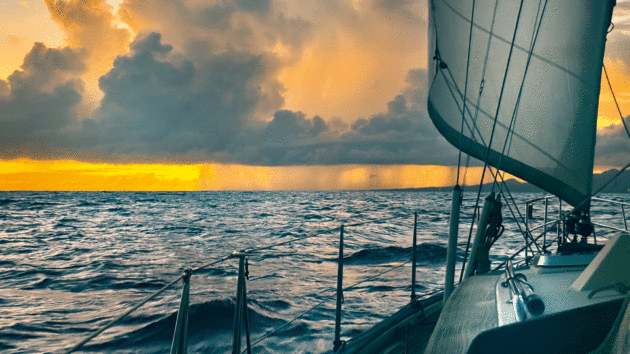
Welcome to Grenada… a squall cell on final approach. Photo: James Kenning
Some participate for the friendly competition of the handicapped ‘fun competition’ divisions, whilst others find most benefit from the layers of cruising red tape that are handled for them by the WCC team in terms of berthing, customs and immigration.
If there is a downside, it is that you ‘sail to a schedule’ though skippers are not duty bound to sail with the fleet and must, of course, take responsibility for all decisions on their departure.
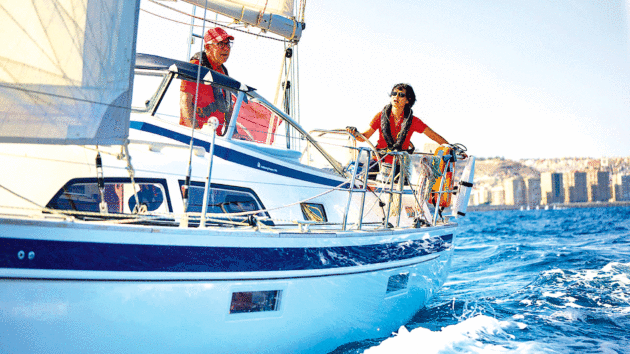
Entry fees have been reduced to encourage more boats under 40ft. Photo: James Kenning
The Atlantic Rally for Cruisers (ARC) remains the main event, taking up to 450 boats from the Canary Islands to St Lucia in one hop, but for the last 13 years, the WCC ‘Atlantic rally for cruisers plus’ (ARC+) event is proving popular with first-time and seasoned Atlantic sailors.
The two-leg crossing departs Gran Canaria in early November, with boats arriving in the Caribbean a month later in Grenada.

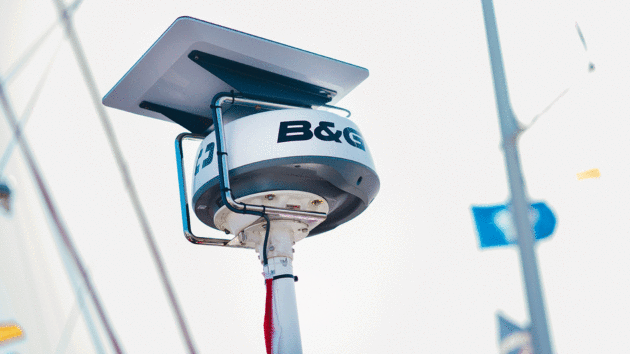
The radar is a vital tool when identifying and tracking squalls. Photo: James Kenning
The attraction of ARC+ over the traditional ARC, that sails direct to St Lucia, is the stop in São Vicente of the Cabo Verde islands; this layover not only gives a mid-crossing opportunity to fix inevitable breakages and stock up on provisions but also offers crews a taste of this fascinating cruising ground and its unique blend of African-influenced island life.
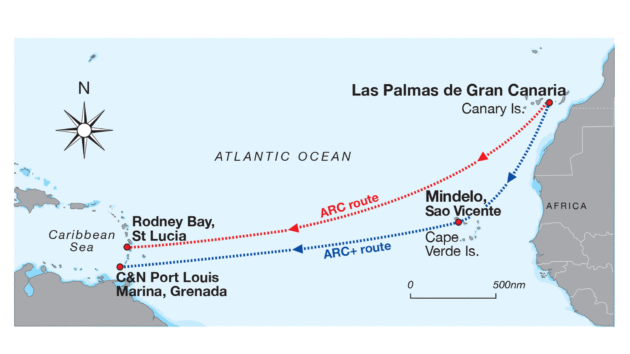
Crossing the Atlantic via the Cape Verde islands is a detour well worth taking, says James Kenning
Pick your boat
Minimum requirements to join ARC+ are a boat of at least 27ft loa (8.23m) and two crew. Whilst the makeup of the latest ARC+ fleet was ‘cosmopolitan’, WCC managing director Paul Tetlow notes that the trend for ARC boats has, for a while, been moving toward ‘newer and bigger’ boats, and with increasing numbers of multihulls.
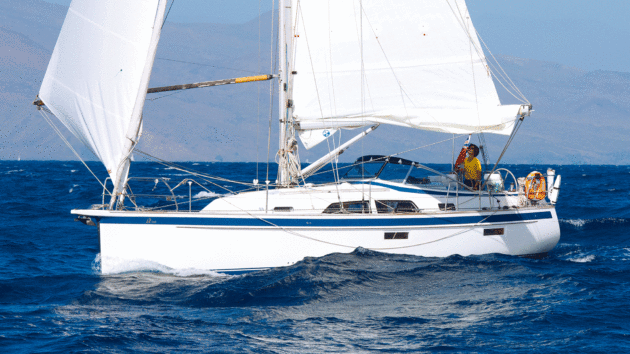
Aria Legra, a Hallberg Rassy 34, was the smallest boat of the 2024 ARC+ fleet. Photo: James Kenning
Paul is keen, however, that the ARC rallies remain relevant to the smaller end of the transatlantic cohort, and WCC hope to attract greater numbers of these cruisers with lower entry fees for sub-40ft (12m) boats in the future.
Notwithstanding the current trend, the 2024 ARC+ fleet was a true mix of boats; new, old, mono, multi, large, small, bluewater, classic and production models.
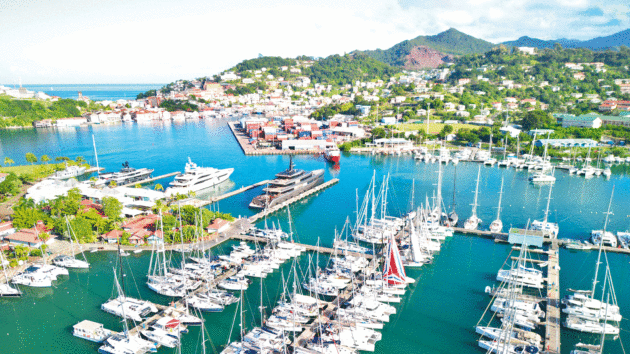
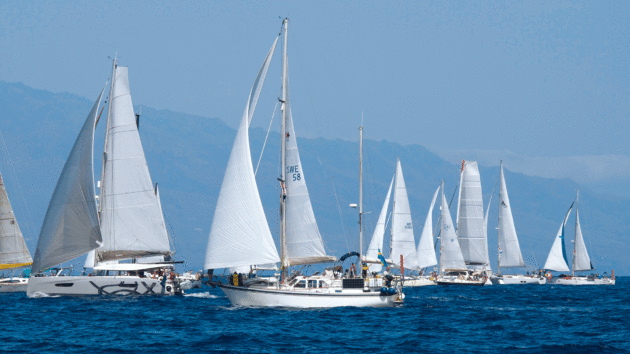
The ARC+ fleet in Port Louis Marina, Grenada. Photo: James Kenning
Largest of the 94-strong fleet was Solaris 74 Luminous, one of 12 rally yachts launched in 2024; with a further eight yachts splashed for the first time in the previous year, almost a quarter of the fleet was less than two seasons old!
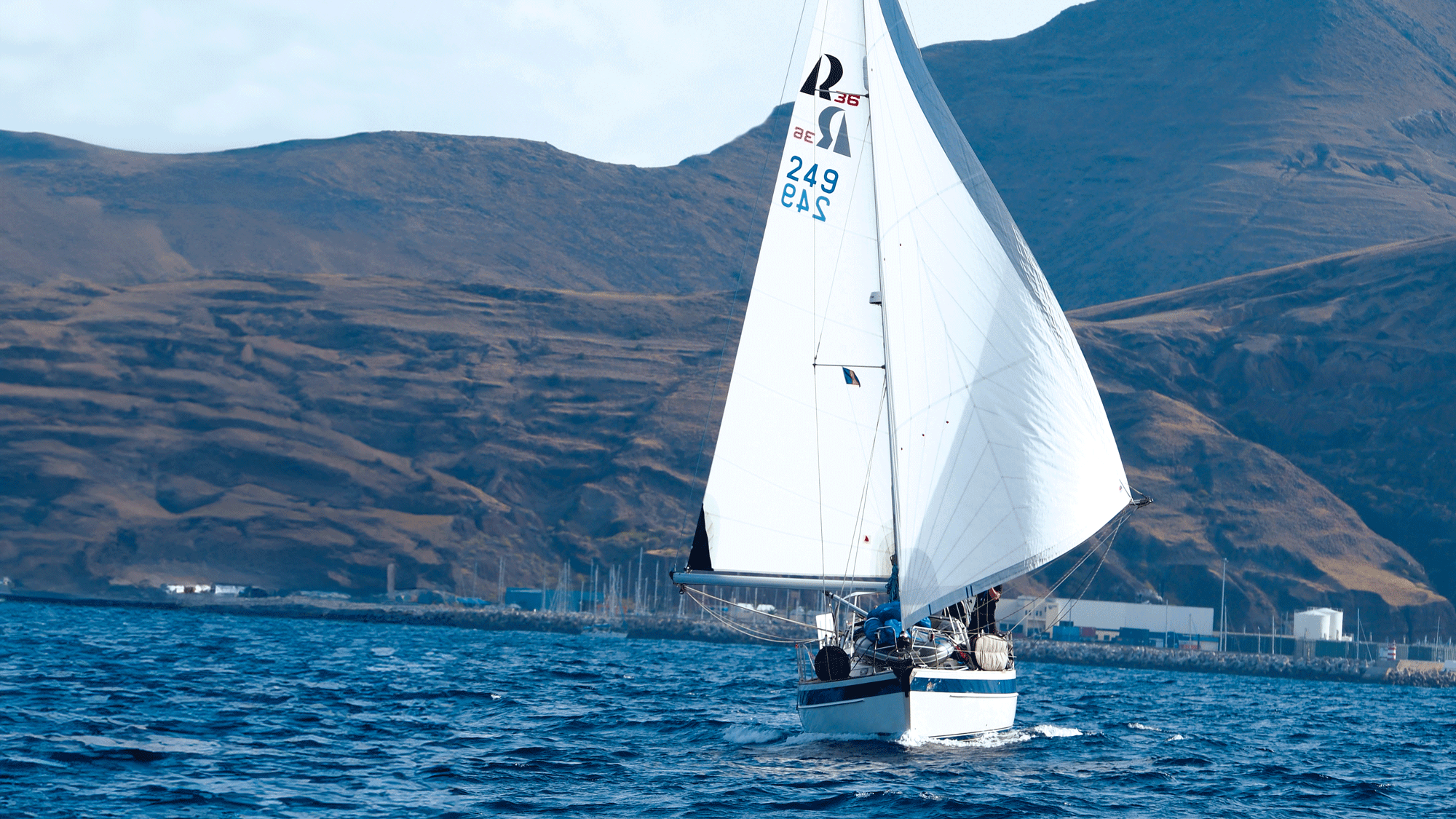
Small though, can still be mighty; at the other end of the length spectrum, Hallberg Rassey 34 Aria Legra (see Me And My Boat, YM oct 2022), the smallest of this year’s entries, finished well ahead of many of the larger boats in the fleet.
Crews were as diverse as the boats they sailed in, and 434 sailors from 26 nations proudly marched to the beat of accompanying brass bands as participants joyously danced the length of Las Palmas marina for the opening ceremony.
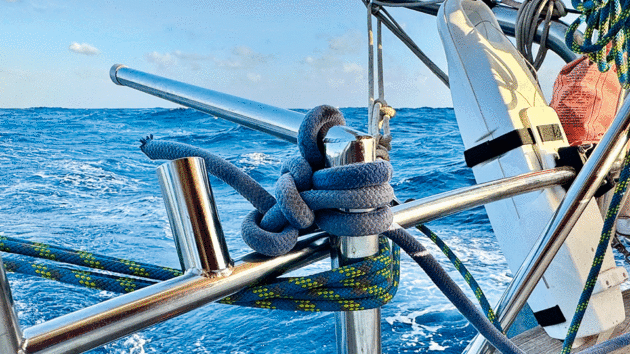
Hope for the best, prepare for the worst! Here the author stabilises a dropped rudder post with 1,000 miles still to go. Photo: James Kenning
All kitted out
New technology has clearly made ocean passage-making more accessible to a new breed of ocean crosser. Wander down the ARC pontoons and you will see transoms fitted with hydrogenerators and light-air sails bagged on foredecks.
The ability to generate renewable energy to power broadband-speed communications clearly appeals to pre-retirement families and enables them to realise dreams by maintaining access to work, friends and schooling.
A significant number of boats had invested in the new breed of wing-assisted spinnakers such as the Istec Parasailor; the ability of these sails to temper gusts and self-adjust to wind shifts makes them popular, especially with short-handed crews, or those who may have been fearful of large, coloured sails.
Whatsapp chat groups linked crews to the rally committee and each other
Keeping in the loop
The established ‘ARC formula’ remains intact with happy hours at bars, parties, kids programmes and seminars filling the week before departure. The ‘Yellow Shirts’ team however continue to ‘develop and adapt’ to make the experience for participants ever more streamlined.
This year saw the introduction of the ‘ARC+ app’ as a much-welcomed means to disseminate information across the fleet beyond the morning VHF broadcast. It provides a one-stop shop for announcements, sailing instructions, local knowledge and race results.
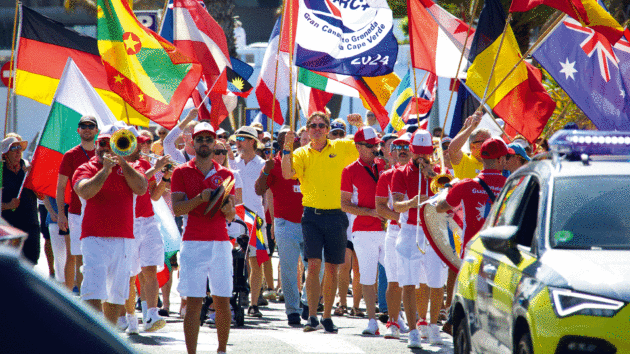
Party atmosphere at the ‘parade of flags’ opening ceremony. Photo: James Kenning
The use of Whatsapp chat groups also seamlessly linked crews to the rally committee and each other on land and at sea. For those with Starlink, this introduced a whole new level of cruising camaraderie with photos shared ‘as they were taken’, bragging rights claimed on fishing successes, and even recipes exchanged for how to cook unexpected catch!
WCC has always taken sustainability and conservation seriously. Its ‘ARC Forest’ programme in Gran Canaria has been long established, but a more recent collaboration with ocean data collection non-profit Sealabs has embedded citizen science within the ARC and ARC+ fleets.
Article continues below…

The Atlantic Rally for Cruisers: ‘The Atlantic was tough, but being prepared saw us across’
Crossing the Atlantic to cruise the Caribbean was a dream long in the making; my planning was meticulous, so, come…
The cost of an Atlantic crossing from one family who did it
We dreamt of sailing the Atlantic for years, but we finally decided to take the plunge and make it a…
Exuberant departure day
Departure day has a real carnival atmosphere. Boats slip their lines and head out of harbour cheered on by crowds on the breakwater dancing to a rousing medley of tunes from the local brass band. A staggered start sees the multihulls depart 15 minutes ahead of the main fleet.
Some take the ‘racing’ element a little too seriously and there was at least one instance of collision on the line, but most look to steer clear of trouble knowing that there are 900 miles to make up for any ‘less than perfect’ start!
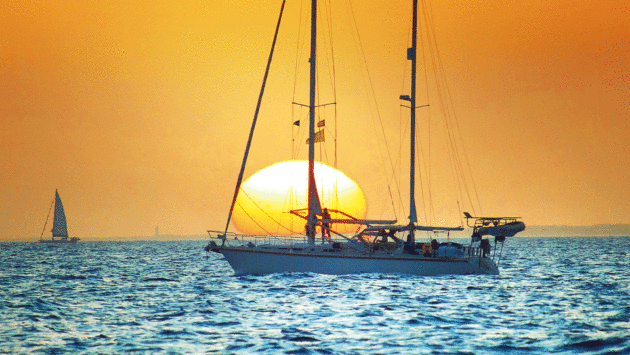
Sundown off Gran Canaria and some boats are still motoring through the light airs. Photo: James Kenning
Adrenalin released, an initial beat into the wind soon turns into a frustrating flat calm, however, and most boats make the decision to motor for a few hours to clear the light airs off Gran Canaria’s east coast. As the sun starts to dip though, the wind fills, and numerous spinnakers are set across the already spreading fleet ahead of nightfall.
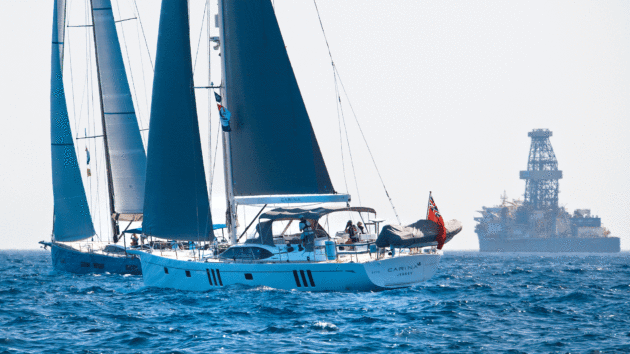
Two 2024-launched yachts, Carina and Luminous, power away at the Las Palmas start. Photo: James Kenning
Leg 1 to Cabo Verde is a five- to seven-day passage for most boats. South of the Gran Canaria wind shadow, the NE Trades fill in on the second day and boats experience lively conditions. After a few days it is rare to visually spot other boats, but closer vessels can be seen on AIS. All boats are fitted with a YB Tracker device that enables friends and family to watch four-hourly progress of all yachts in the fleet.
Based on the YB data, the WCC also provides an automated email service to participants giving ‘on demand’ position reports of their ‘competitors’; receipt of these can either encourage or frustrate! Also pushed by email are daily weather reports that crews can use to supplement their own meteorological information sources such as PredictWind or dedicated routing services.
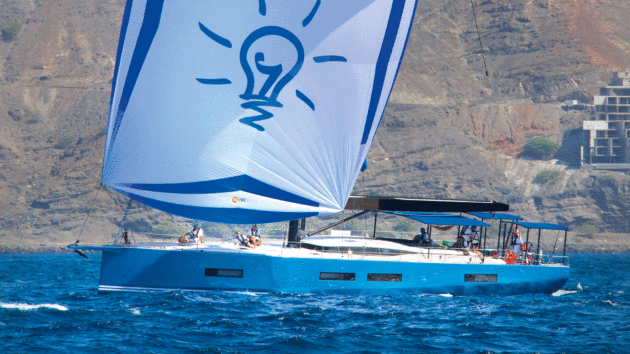
Solaris 74 Luminous, the largest yacht of the ARC+ 2024 fleet. Photo: James Kenning
A taste of Africa
For many, arrival in Mindelo gives a first taste of ‘exotic shores’. There is a real African vibe to São Vicente, not least within the bustling vegetable and fish markets a short walk from the marina. Many boats arrive in need of repairs and Boat CV are handily placed within the marina; their motto ‘if it is man-made we can fix it’ stands true and prices are very reasonable. Some basic sail repairs are also possible, but mostly only for white sails.
Outside the confines of the marina, security has more recently become an issue; one participant was attacked by knife for his phone, and another experienced an attempted pick-pocket robbery by the cash dispenser. Common sense and awareness are the best defences, but the local police took the incidents seriously
and there was a clear increase in their presence whilst the ARC was in town.
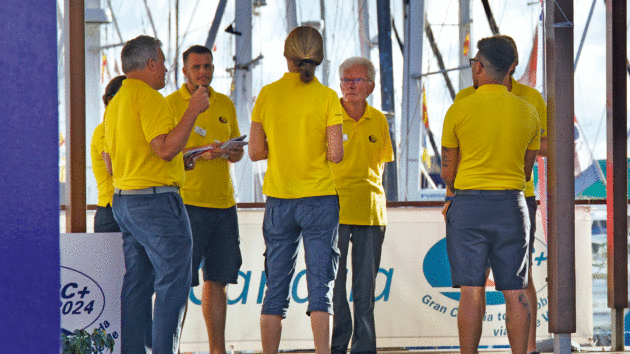
The ‘Yellow Shirts’ receive their morning briefing. Photo: James Kenning
Health is another concern, and a significant number of the rally participants fell ill to a gastric ailment… don’t drink the ice! The ARC+ shoreside events programme included welcome and prize-giving parties as well as opportunities to tour São Vicente and its neighbour São Antao with its truly majestic scenery.
The real deal
It’s not long before the fleet is again slipping lines for the main 2,200 mile passage west. This time all boats start on the same gun, dodging the many anchored boats along the start line. Boats are advised of the wind acceleration zone between the islands, but each year there’s usually one over-canvassed victim! Local topography is the marina bar discussion of many tacticians, especially strategies to escape the wind shadow of Santo Antão; many boats resort to engine.
The Atlantic is a big place; the sense of isolation under a moonless and star-studded night can be life-defining for many people. However, expansive as it may be, vigilance is still of utmost importance; this year two abandoned vessels were reported (one with a dead soul aboard) by ARC boats.
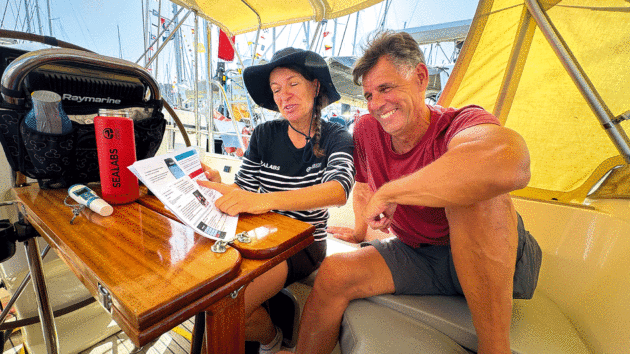
Crews are briefed by the SeaLabs team on how to collect ocean data during the crossing
Radar is a vital tool not just for collision avoidance, but also to spot and track squalls, especially in the latter third of the passage approaching the Caribbean; early identification of these gives the necessary time to reef, douse, or furl sails before strong gusts overtake, and potentially overcome, an unsuspecting boat.
The presence of sargassum weed also takes many by surprise; fields of this can extend for hundreds of miles and play havoc with steering vanes or hydro-generators… tools should be crafted to safely push this devil off leading edges, and energy budgets should factor the potential downturn in free electricity. Some boats have even reported weed carpets dense enough to stop boats sailing at 10 knots.
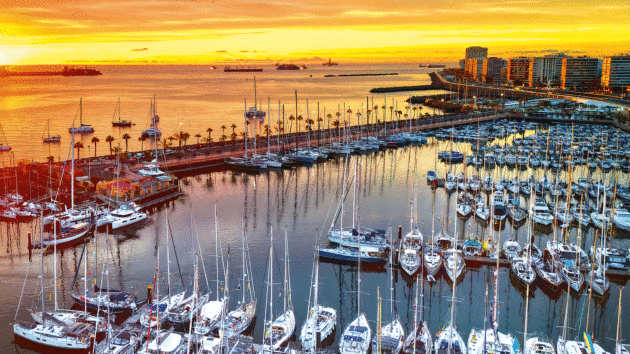
Sunrise over the ARC+ fleet in Las Palmas marina, Gran Canaria. Photo: James Kenning
For many the first sight of land is a longed-for event after a difficult passage; for others it heralds a sense of loss that the adventure is nearly at an end. Either way, all boats are assured of a warm welcome by the ARC team, day or night, when they finally motor into Port Louis marina on the west side of Grenada. Rocket-fuel-strength rum punch is dispensed from the wheel-barrow of joy, and sea legs now wobble to the strangely unfamiliar feel of terra firma.
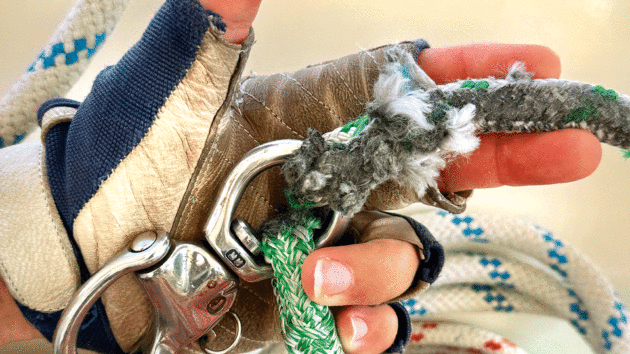
Chafe is a serious problem; this is after only two days set against the spinnaker pole. Photo: James Kenning
Island time
Now starts the process of adjusting to island life and ‘island time’. Formalities are taken seriously by the Caribbean authorities; a smile, clean dress, and a sense of humour will help the paperwork pass quicker. A final round of parties is orchestrated by the WCC team, but it is now down to individuals to explore their new surroundings.
Grenada is a fascinating island with much to offer. Excursions to waterfall pools, chocolate factories, and the hills of the interior are fabulous; a visit to the world’s only working waterwheel-driven rum distillery is a must (though sticklers for health and safety should be prepared for a shock).

Photo: James Kenning
After years of planning, and over 3,000 miles of sailing, it may seem like the adventure is at an end; in reality though this is where it now begins – the chance to explore the island chains of the Caribbean in your own boat is the prize at the end of what was hopefully a wondrous journey.
Acknowledging the risks
As a final note, the ARC+ and ARC rallies of 2024 were each beset by tragic circumstances. On the ARC a soul was lost overboard unrecovered and, separately,
a catamaran was abandoned at sea following flooding of the vessel.
On the morning of the scheduled prizegiving for ARC+, despite valiant efforts of fellow sailors to administer medical aid, the unforeseen and sudden death of an ARC+ skipper sent sadness through the fleet.
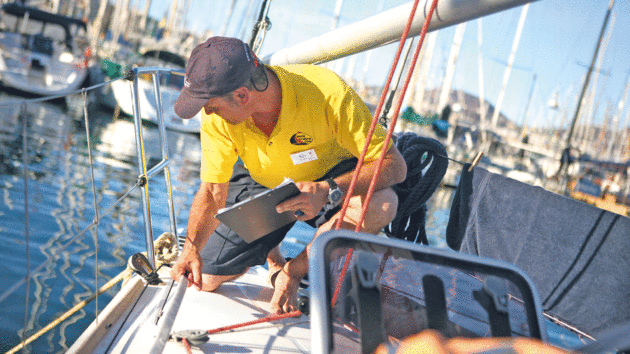
Rob Gaffney inspects the boat. Photo: James Kenning
The first two incidents are a reminder that although events such as the ARC rallies may have ‘normalised’ Atlantic crossings by small boat in the minds of many, risks of open ocean sailing are significant and real. The latter tragedy may emphasise that we know not when our time will come; we should embrace life and realise our dreams not tomorrow but today.
Enjoyed reading this?
A subscription to Yachting Monthly magazine costs around 40% less than the cover price, so you can save money compared to buying single issues.
Print and digital editions are available through Magazines Direct – where you can also find the latest deals.
YM is packed with information to help you get the most from your time on the water.
-
-
- Take your seamanship to the next level with tips, advice and skills from our experts
- Impartial in-depth reviews of the latest yachts and equipment
- Cruising guides to help you reach those dream destinations
-
Follow us on Facebook, Twitter and Instagram.
Note: We may earn a commission when you buy through links on our site, at no extra cost to you. This doesn’t affect our editorial independence.