


When Mawgan Grace first took his daughter sailing, he discovered how beneficial it was to share his passion
We’ve all caught the sailing bug at some stage in our lives but for me it came relatively late and I wish I’d caught it earlier. Growing up in Cornwall would have been a sailor’s paradise with interesting ports, stunning scenery and wild inlets but due to my social circle and coming from an aviation family, sailing was never on the cards.
Without the balance of hindsight sailing seemed a cold, expensive and nausea inducing pastime. Yes, we know it can be all of these things and more, and I recall the stories of my grandfather buried hurriedly at sea in a Force 8 and of my friends walking along the beach after a storm remarking that the dinner service washed up looked identical to theirs on their new Beneteau 37 which should have been safely on its mooring.
However, sailing can also give you so much and this is especially true on challenging days. As humans we grow, learn, gain confidence and satisfaction when we are tested. The more we learn the more we enjoy and the dopamine cycle perpetuates.
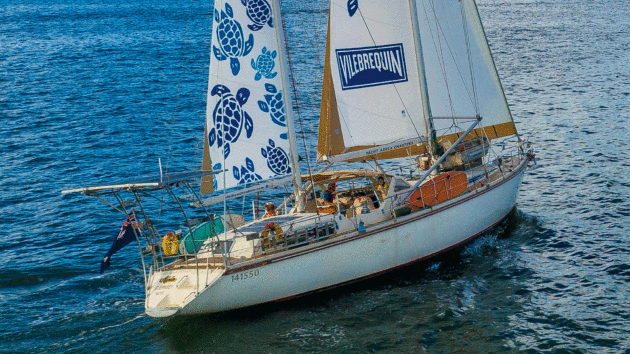
Mawgan’s 53ft Amel Super Maramu ketch makes an ideal boat for first timers, with a flexible sail plan and plenty of space. Photo: Mawgan Grace
Do anything enough and you will identify with the activity. This is why surfers, golfers, musicians and of course sailors have their own unique niche which often reflects in the clothes they wear. The latest research suggests your DNA will literally adapt to your lifestyle. If for example you want your children to be musically inclined, learn an instrument yourself before planning a family!
As Mr Rat exclaimed in The Wind in the Willows, ‘Believe me, my young friend, there is nothing – absolutely nothing – half so much worth doing as simply messing about in boats.’ That feeling of accomplishment, adventure and utter independence when you first learn to ride a bicycle is replicated when you are afloat and this is true for all ages.
For me I first remember this feeling when I was 15 years old in an old tin bath tub meandering down a brook and later when I learned to scull and cox fours and eights with my school rowing club on the Thames. This feeling, if nurtured, will become a lifestyle to be enjoyed and savoured.
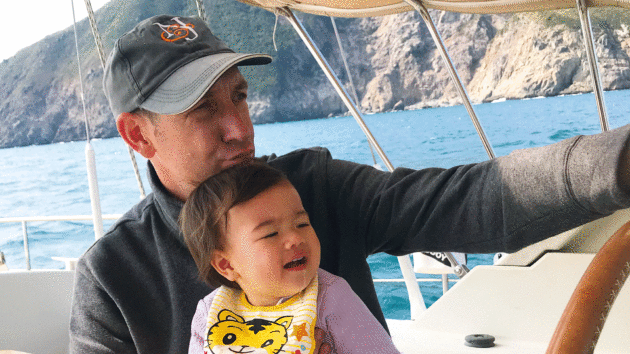
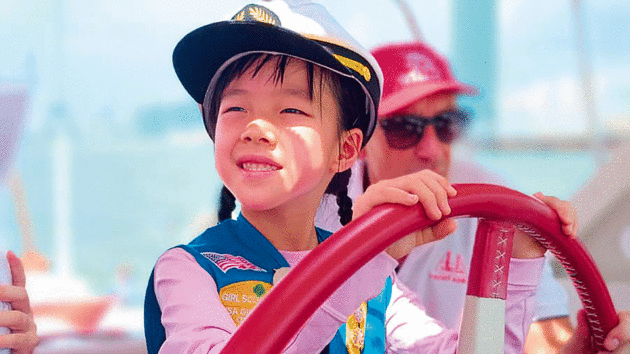
Mawgan’s daughter started sailing with her parents at a young age. Photo: Mawgan Grace
A change of course
Since arriving at Hong Kong’s fragrant harbour almost 20 years ago my life took an interesting turn. My company had its own Jeanneau 47 sailing yacht and for £50 a year I could sail it as much as I wanted.
With over 80% of Hong Kong containing green country parks and 265 islands with some stunning sandy beaches there was a lot to explore. Soon I caught the sailing bug and climbed the RYA ladder to Commercial Yachtmaster Instructor, where I can now enjoy the satisfaction of watching others enjoying this lifestyle sport.
After having owned my Amel Super Maramu ketch for about three years my daughter was born and from the get go I wanted her to be immersed in the lifestyle. I learned that yachts, especially bluewater cruisers, are the perfect environment for children. There are no sharp corners, lots of handles to hold onto and even cupboards are pretty childproof!
The centre cockpit is a natural play pen and the noise and motion of the ocean rocks them gently to sleep. Any accidents outside are easily washed away and while they play and sleep you too can play, enjoying sailing from anchorage to anchorage or just relaxing at anchor. Having sailed from a few weeks old my daughter, now seven years old, has grown up sailing and knows no different. She never gets seasick and always looks forward to our next adventure.
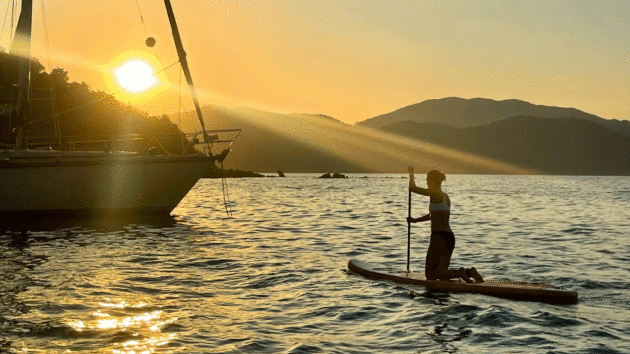
For families, the destination and time playing is often more important than the sailing. Photo: Mawgan Grace
Children-focused sailing
For the past five years I’ve been operating my yacht for charter. This includes day and overnight charters with sailing lessons thrown in for those interested. Most of the time I have multiple families with children in the boat and for the past three years I’ve been running ‘Little Captain Sailing and Leadership’ courses.
Typically I will take seven children between the ages of three and 12 along with four other adults. Here they will get to experience helming, understand navigation, some basic knots, bouyage, rules of the road and sail trim. We will sail for around two hours and anchor for a seafood lunch before sailing to a beach for swimming followed by a two-hour sail home, arriving at sunset.
The feedback I’ve received has been very positive, with some families returning many times. It’s an activity totally unlike anything they are used to and they thrive on it. It’s such a pleasure to see the children working together on the challenges I set. At the end of the day I ask questions based on the topics we’ve covered and it’s amazing how much they’ve absorbed.
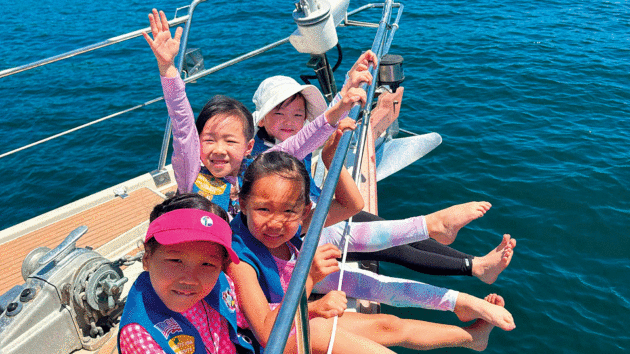
Keep everyone safe and comfortable, with suncream, sunhats, food and water. Photo: Mawgan Grace
Getting children into sailing
If you are going to sail with children here are some of my tips and thoughts for giving them a fun taste of yachting.
Get kids involved
It never ceases to amaze me how bright and adaptable young children are. During Covid my wife and I started a pre-school following the Montessori philosophy. This is child-led learning combining children of various ages. It sounds laissez-faire but the results speak for themselves as the classroom becomes a melting pot for creativity. It’s a fun educational environment and the children thrive in it.
The more responsibility you give a child the more they develop leadership, confidence and feel ownership in their life. The simple act of giving children chores and jobs makes them feel useful, empowered and part of the crew.
Examples of ‘distributed responsibility’ would be asking children to maintain a good lookout. Not only are their eyes probably better than yours but they will quickly learn the clock system! Turn it into a fun challenge to see if they can spot more vessels than you.
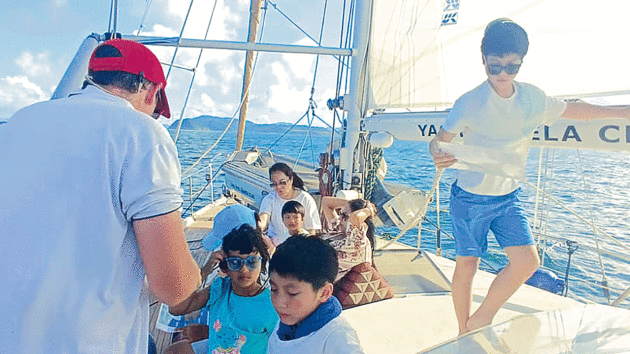
It’s amazing how much children absorb when they’re having fun. Photo: Mawgan Grace
For your family even washing the boat after a day’s sail can be fun with a hosepipe but it also instils many important values. It teaches them the value of looking after possessions.
It also demonstrates the importance of preventative maintenance where you can praise them for highlighting a defect that could potentially compromise safety. Undertaking your engine WOBBLE checks (water, oil, belts, bilge, leaks, electrical) with children also allows them to develop an understanding into the workings of the engine and its various components.
Provide a safe environment
Ensuring emotional and physical safety onboard the vessel and tender applies for any passenger young and old. I wouldn’t take novices, children or older people out in marginal weather. Gusty, strong winds, big swells or limited visibility can easily scare or disorient them and lead to seasickness and their miserable incapacitation.
Don’t attempt to show off or scare your passengers. Being powered up and heeling heavily can be a very uncomfortable experience and potentially dangerous for non-sailors. If in doubt put in a reef and on a ketch I often put away the main sail with just the genoa and mizzen to keep the angle of heel to around 10 degrees.
For children and non-sailors just the novelty and excitement of being out on the water with new sensations will be a thrill in itself.
Build up the experience slowly as their comfort bubble won’t be as big as yours. Allow them to follow you through the effects of the helm and how to maintain a heading using external references. If there is a bit of swell and your crew is looking a little nervous I put on some Louis Armstrong music and it always relaxes everyone!
The younger generations get easily sucked into any LCD display, including iPads and plotters, so try to get their eyes outside and looking at the big picture. This, combined with giving them control should also reduce the effects of potential seasickness.
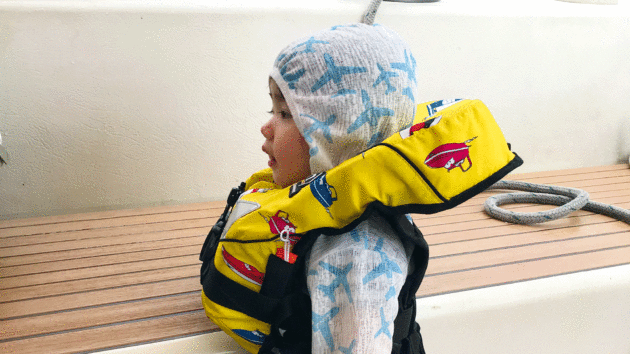
Set your rules, like when lifejackets will be worn. Photo: Mawgan Grace
As the skipper you must consider the safety of your crew, vessel and of the passage. A clear, simple and interactive safety briefing from the outset of what to hold, where they can go and actions in the case of a MOB is vital, plus the location of the safety equipment. Any children leaving the shelter of the cockpit should wear a lifejacket and be accompanied by an adult.
Ascertain before you sail with newcomers who can or cannot swim and keep a special eye on them. Tell your little passengers what they can or cannot touch. Be careful with powered winches as little fingers like to press buttons and consider turning them off.
Make the environment comfortable
Children have smaller tolerances to temperature, thirst and hunger so to avoid any discomfort plan accordingly, avoiding long passages. It’s common sense but in summer make sure everyone drinks lots of water and wears sunscreen, with hats and sunglasses offering good protection. In winter layer up to keep warm and have some simple snacks for the passage available including fruit, pastries and sandwiches.
Children are constantly changing their attitude as they develop, increasing awareness as they learn to navigate the complex world. This not only applies to their diet where one day they may love carrots but the next day they may hate them! Their comfort zone will also change as they develop.
A child may flatly refuse to try a new activity or even a tried and tested one so it’s important not to force them. This could damage their confidence, their trust in you and go against the very principles you are trying to achieve, setting up for failure.
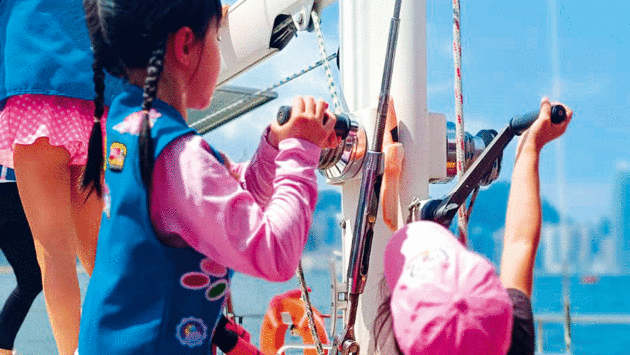
In a safe environment, delegate as much age-appropriate responsibility as possible. Photo: Mawgan Grace
A mitigating approach would be to discuss in the form of a simple briefing an outline of what they can expect to experience in a positive and constructive manner. Many people young and old fear the unknown. Once they are in the experience they should enjoy it but you need to convey what they should expect first.
Remember that they have total trust and faith in you so be patient, show confidence and positivity and understand their limitations. Don’t get angry, frustrated or raise your voice – be the Captain.
Article continues below…

A family adventure sailing through the Corinth Canal
The timing was tight. I took the call 24 hours before we were due to fly. Alex kindly asked me…

A family charter adventure: ‘The squall suddenly passed and the wind and waves abated to a quiet calm in the bay’
We’ve just touched down at Dalaman airport, Southern Turkey and it’s June 2024. It’s our first time bareboat chartering as…
Make it fun
Learning should be fun. When I’m conducting my ‘Little Captain’ courses I’ve got a stash of pirate gear which the children find before we even set sail, creating a fun, relaxing tone onboard. Kids love to be active so get them into teams pulling sheets, winching and helming whilst under supervision.
I hold a knot-tying competition which they enjoy and if they start to get bored I will show them how to make a Portuguese sennet for example. Breaking up the day’s activities keeps everyone’s interest levels up with sailing, lunch, and beach and swimming time.
Conclusion
Sailing, like every activity in life, contains an aspect of risk. However, it is easily manageable when you mitigate these risks. Driving, for example, is far more dangerous as an activity yet this is barely mentioned in the tabloids.
It has been shown that controlled and age-appropriate risk is necessary and beneficial for the development of children. Helping them spot risks and navigate them safely is good for them.
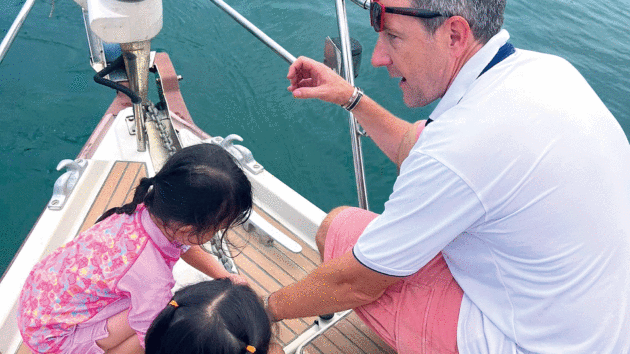
Keep kids engaged and they will learn without even trying. Photo: Mawgan Grace
Our younger generations spend far less time than we did pursuing outdoor activities but an alarming amount of time in atrophy facing LCD displays connected to often toxic social media. The negative emotional and physical impacts of this new lifestyle is only now being realised, with children suffering from depression, anxiety and other mental disorders.
I’m therefore trying every day to provide positive and constructive activities for my daughter and other kids, to give them a healthy and happy start in life. Sailing has so much to offer the whole family so trust in yourself and have trust in the children. Get out, go sailing and enjoy the gift of sail.
Family cruising kit
You don’t need to break the bank, but there are a few things to take with you for family fun afloat, as Theo Stocker has learnt
You don’t actually need to buy very much specialist kit to take children sailing. They are not going to be facing gales or clinging to pitching decks (or shouldn’t be), so the clothes they wear can be what they wear on land for the most part.
Having said that, whenever we go on the water as a family, we take an embarrassing amount of stuff, from travel cots to warm clothes, snacks and toys. Having the stuff you need makes it hard to travel light, but children will enjoy themselves more if they aren’t cold, hungry or bored. Here is a round-up of the things we’ve found helpful in recent years.
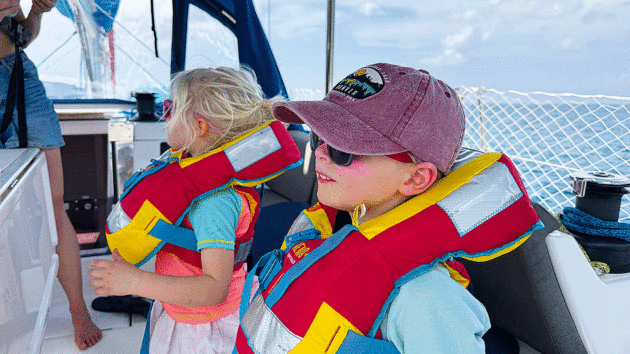
Lifejacket Spinlock Nemo+. Photo: Mawgan Grace
Lifejacket Spinlock Nemo+
Children under 10 years of age will need a foam lifejacket, and ours have loved their Nemo+ lifejackets (150N buoyancy). The foam at first appears bulky, but this gives the jacket a narrower, shorter profile so it doesn’t impede movement at all.
The head support doesn’t flap and flop around, but sections on the underside allow it to wrap and support their head in the water. The ‘plus’ bit in the name means that these ones have an integrated safety harness with a clip-on point at the back, which we wouldn’t do without. Grab handles front and back make manhandling little ones onto dinghies, on board, or out of the water easy one-handed.
There’s a wide range of adjustment as they grow, plus a whistle and reflective patches. Our children use theirs to play in the water, and they can swim easily, or bob about on their backs. www.spinlock.com
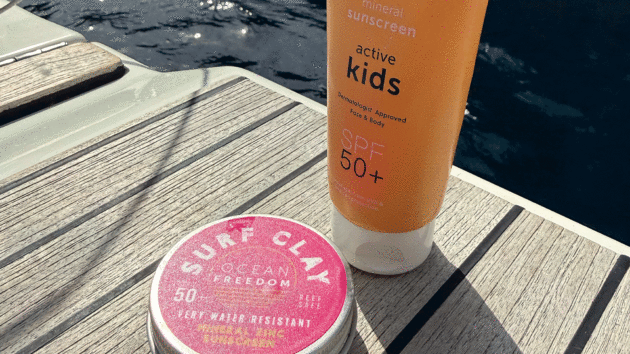
Sun protection Ocean Freedom Mineral sunscreen and Surf clay. Photo: Mawgan Grace
Sun protection – Ocean Freedom Mineral sunscreen and Surf clay
Suncream goes on every day at sea, so getting one that doesn’t wash off or sting the eyes is essential. We recently tried some from Ocean Freedom and love it. This mineral based, broad-spectrum suncream is dermatologically tested and reef safe. Our daughter with eczema is fine with it. The cream is very thick, and takes a bit of rubbing in, but stays on really well and provides very effective protection.
The children also loved the Surf Clay zinc sunblock. We’ve got pink, blue and white to choose from, so they can put their warpaint on while fully protecting their noses, ears and cheeks. You can see when it has rubbed off, and it washes out of clothes easily. The clay also comes as a stick. www.oceanfreedom.com
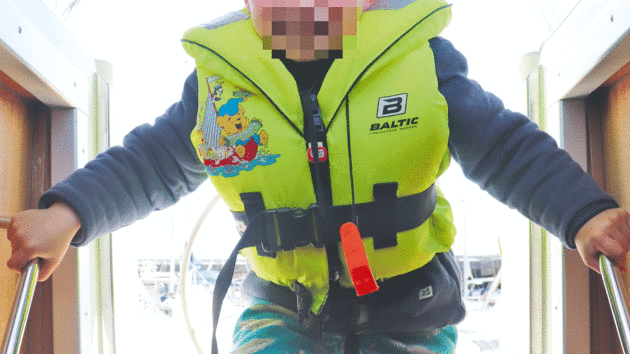
Lifejackets Baltic Bamse. Photo: Mawgan Grace
Lifejackets – Baltic Bamse
The Baltic Bamse lifejacket is a 100N buoyancy lifejacket that features a popular Swedish cartoon character. It comes in three sizes 3-10kg, 10-20kg and 15-30kg, and we found the middle size worked well for our 3-4 year old. It is a larger vest than the Spinlock, but is made with layered foam, so that it conforms to the child’s body.
The collar keeps well out of the way and the front doesn’t restrict movement, though the body front is slightly longer when sitting down. Bright yellow fabric and reflective patches make it visible, with a whistle also attached. Crotch and waist straps have plenty of adjustment and there’s a grab handle on the back. If you want a full safety harness, the Baltic Ocean Harness lifejacket offers that, also with 100N buoyancy and sizes for 3-40kg (£85).
www.baltic.se
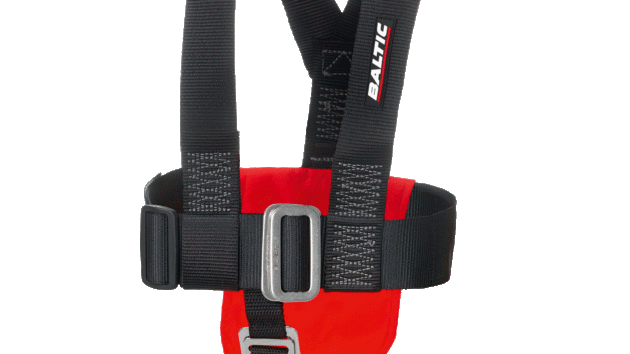
Harness Baltic Child Safety Harness. Photo: Mawgan Grace
Harness – Baltic Child Safety Harness
Sometimes children just refuse to wear lifejackets if they feel bulky, hot, or they just want a cuddle. Our rule is that if the boat is underway, they can take lifejackets off down below, but have to have one on deck, and if we’re heeling, they’re clipped on too.
The Baltic Child Safety Harness is pretty well unique on the market, but we love it because we can keep the children secure and clipped on so there’s no chance of them going over. The crotch strap has a wide fabric panel for comfort, and a metal buckle for strength when lifting. The attachment point is on the back so small hands can’t unclip themselves.
This model is rated for children up to 20g, but harnesses for 20-50kg and for adults are also available. www.baltic.se
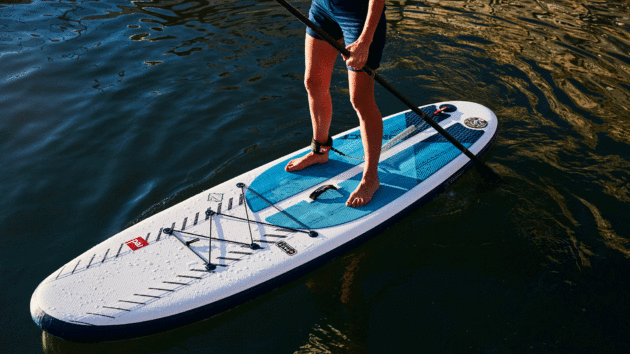
Paddleboard Red Paddle Compact 11ft. Photo: Mawgan Grace
Paddleboard – Red Paddle Compact 11ft
This 11ft board packs down to 56cm x 42cm x 32cm, and takes less pumping up as it’s 6in thick rather than 9in, while still being very stiff. It’s a decent size and fairly wide (32in), so it’s pretty stable. The fins are relatively short, so you can paddle right onto the beach.
We’ve found we can fit two smallish children and a kneeling adult without feeling overloaded. It’s also a lot lighter than our old board (8.75kg), which means getting it on and off board is easy. I’d have liked a painter attachment point at the bow for keeping it alongside a boat, though it does have a spiral leash. It comes with a 5-piece carbon paddle that fits into the bag and is nice and stiff in use.
All in all, an excellent board to have on a boat. www.red-equipment.co.uk
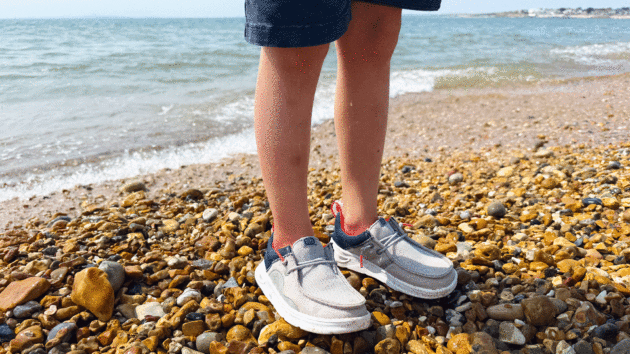
Boat shoes HeyDude Youth H20 water. Photo: Mawgan Grace
Boat shoes – HeyDude Youth H20 water
Bare feet are a recipe for stubbed toes or worse on board, though in benign conditions we don’t insist on shoes. In cold, wet weather, normal wellies are fine, but for messing around on the boat, on land and for playing in the water, these HeyDude H20s have been brilliant. With foam soles and mesh uppers, they are super light and instantly comfortable even without socks.
They are proper shoes though, so can be worn for longer periods and when walking ashore. Drainage holes let water escape quickly, and the mesh uppers are reasonably fast drying. Laces are elastic so don’t need to be tied, and they also look pretty cool, so it’s not a battle to get children to wear them, while the fully enclosed shoe gives more protection than sandals and more security than Croc-type slip-ons. Sizes range from C11-J7. www.heydude.uk
Also good to have
Netting
We don’t let the children go on deck unsupervised, so netting around the guardwires is more for peace of mind, but most charter companies will fit it for you. I take a short section of netting with me to close off open transoms or other hazards.
Games and toys
Books, Duplo, building magnets and cars all go down well. We avoid Lego as tiny pieces are easily lost and can clog pumps. Colouring is a favourite, but do watch for rogue graffiti artists, especially if it’s not your boat.
Sunhats
Sunhats are a must if sunny, especially as children’s skin is more sensitive to sunlight. These should cover the ears and neck, as well as the head, though keeping them on is a challenge.
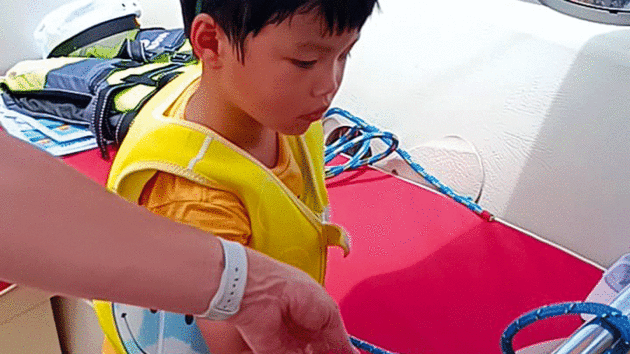
Knot tying is a Little Captain staple. Photo: Mawgan Grace
Rash vests
Essential when sailing somewhere hot (includes the UK) for playing on the beach, on deck or in the water.
Awning
We take our camping awning with us – a hexagonal one from Decathlon that has SPF50+ and is easily attached to mast, backstay and guardwires, to give us somewhere shaded.
Waterproofs
These need to be actually waterproof. We bought the basic PU waterproofs from Didriksons for about £45. These have been bombproof, and the fit meant they lasted a long time. For warmth, we take fleecy onesies, which the kids love wearing.
Wetsuits
Playing in the water is a must, and wetsuits prolong the fun. Make sure it fits properly, rather than being one they will ‘grow into’. Most sailing clubs are awash with wetsuits being handed down.
Washboards
One hazard we are often aware of is falling down the companionway hatch. Keep it closed, or put the bottom board in if smaller children are onboard.
Enjoyed reading this?
A subscription to Yachting Monthly magazine costs around 40% less than the cover price, so you can save money compared to buying single issues.
Print and digital editions are available through Magazines Direct – where you can also find the latest deals.
YM is packed with information to help you get the most from your time on the water.
-
-
- Take your seamanship to the next level with tips, advice and skills from our experts
- Impartial in-depth reviews of the latest yachts and equipment
- Cruising guides to help you reach those dream destinations
-
Follow us on Facebook, Twitter and Instagram.
Note: We may earn a commission when you buy through links on our site, at no extra cost to you. This doesn’t affect our editorial independence.