


Charlotte Drew (née Wheatley) recounts early family adventures with a father who was one of the first Clipper skippers. He’s also a veteran OSTAR and AZAB sailor who has sailed more than 260,000 miles around the world.
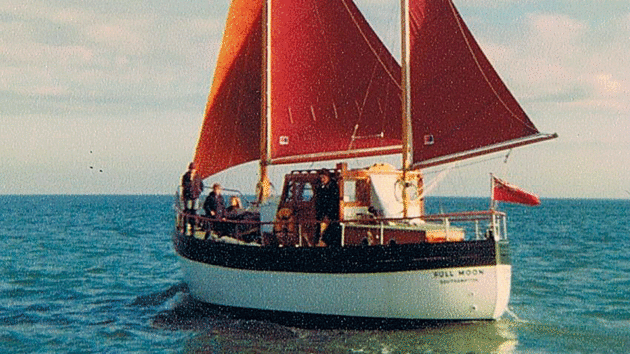
A small girl was curled up in the corner of the wheelhouse, sitting on the step with an arm around her even smaller brother. The tension in the wheelhouse was palpable.
The boat, a wooden motor sailor, was rolling on her round bottom, wallowing in an unnatural way now that her forward propulsion had gone, the stabilising main sail of little use with the wind and waves behind her. She was the kind of boat which any child would draw: heavy, white with dark green topsides, with a round back end, a wheelhouse, a stubby main and mizzen mast.
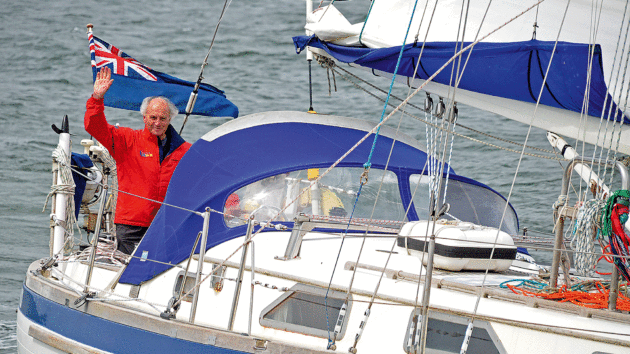
Mervyn sets off on an adventure in Tamarind at the OSTAR transatlantic race in 2013. Photo: Charlotte Drew/Wheatley
The gear box had fallen off. We were approaching Roscoff in the dawn, it was blowing about Force 4-5 and there was a swell. We had a tow into harbour where we spent a few days tip-toeing around a helpful French engineer and a grumpy father.
The Wheatley family no longer has a boat. This feels profound, for our family and for our friends whose immediate response is ‘that must be a big change for your dad’, with a slightly worried look.
It is, but he has taken a few years to ease himself out of it – perhaps even since his ‘Atlantic epic’ in 2017; he just never seemed to feel quite the same about Arethusa, the replacement for the lost Tamarind. Now our parents can go on holiday to absolutely anywhere; so far, a couple of river cruises and sailing on a friend’s luxury yacht in the Caribbean!
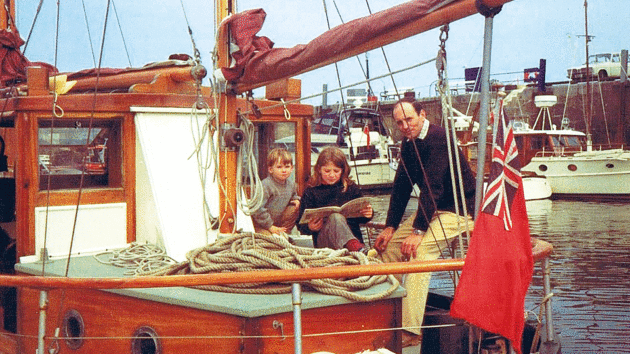
Fred, Charlotte and Mervyn (l-r) relax aboard Full Moon. Photo: Charlotte Drew/Wheatley
Mucking about
All this made me reflect on memories of mucking about in boats. Hours and days and nights of sitting and watching and learning; the rolling sea, feeling the movement and shift of the boat, sounds of sails and rigging and hull, helming with intense concentration, the feel and smell of the fluctuating wind, the spray or sun on your face, a wet bum and rain down your neck.
Going below made me as sick as a dog so I spent all that time on deck, hunting out the most sheltered spot where I was least likely to be in the way, like my sheep do now.
If we were in our bunks we would sometimes wake suddenly as the boat plunged into a wave, exchanging a grin with my brother across the cabin as we momentarily evaded gravity. Of course, the glory of a wooden boat, which the child’s drawing doesn’t generally pick up on, is that it would leak mercilessly, principally over our parents’ bunk!
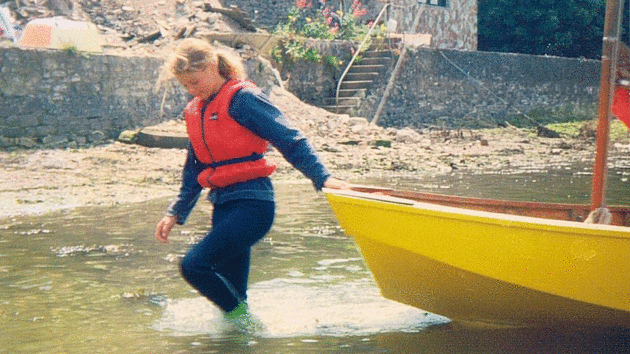
Alice, Charlotte’s own boat. Photo: Charlotte Drew/Wheatley
I recall the beautiful feeling of arrival, with relief from the sickness and features to look at in the emerging dawn, the peace of a sheltered place, the preparation of the boat and our family team quietly coordinating the mooring up, and the ultimate bliss of the engine being turned off.
Then greeting and observing others around us, going ashore to explore, crêpes, sunny days on the beach or rowing around in the dinghy, eating blackberries as we climbed the steep hill up onto Sark, listening to the adults’ ‘nautical horror show’ stories, occasionally introducing a boyfriend (and later my husband) to the vagaries of sailing life, trying to help my mum do the ever required ‘housework’, sitting together in the wheelhouse on a calm evening or out of the rain eating supper and playing whist.
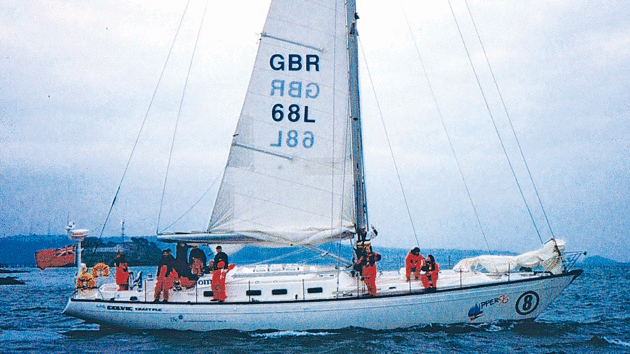
Waving off Mervyn’s mate Andrew (Spud) Spedding and crew on Blackadder at the start of the first Clipper Round the World yacht race. Photo: Charlotte Drew/Wheatley
Handy skills
And, of course, winter days in one of the Plymouth boatyards learning some very handy skills in stripping, painting and varnishing wood, and health and safety! The joys of a wooden boat! Marinas are perfect for eyeing up other boats and seeing what people are up to!
The one time my dad ‘taught’ me to sail was by shouting across the bay while I pelted off in the little wooden dinghy he had spent months building, shooting stroppy teenage looks over my shrugged shoulder and loving the freedom.
And then I think of the time a few years ago when I joined them in the Caribbean and he went to great lengths to have an inflatable sailing dinghy mended so I could sail it; it felt like sailing with ‘Mr Soft’ from the Softmints advert!
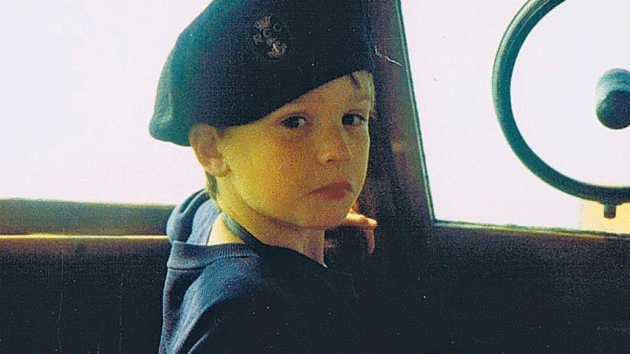
Fred keeping watch. Photo: Charlotte Drew/Wheatley
And then there were the exciting moments: one early morning I was lying in my bunk listening to and feeling the boat as we plunged along in the driving rain.
The sound of the engine on Full Moon would drown out a lot but, like most children, I could read the tone of the voices up in the wheelhouse so that when both parents swore loudly I was immediately alert and unsurprised when my dad called me to help. I paced up the companionway to see the rain lashing on the windscreen and my mum already feeling her way along the lunging deck.
The boat was rolling and the mainsail lashing and as I followed her out of the door, wearing only my nightie, I could see why. The nut and washers had come off the gooseneck and the boom was flailing around. She went to release the halyard while I reached to try and pull down the sail. The boat rolled to lee, the water came up to meet us, and my mum slipped.
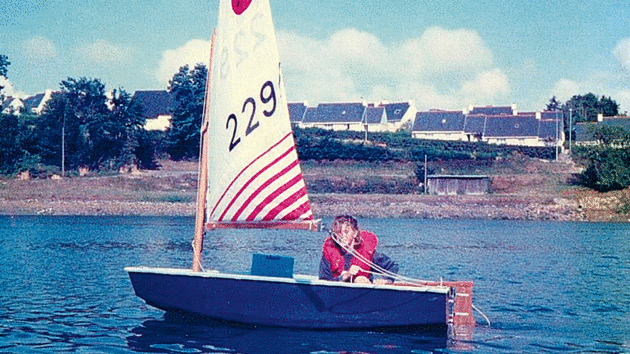
Blue Moon, built by Mervyn. Photo: Charlotte Drew/Wheatley
I called out, only able to watch as she fell away towards the water and can still clearly see her foot landing on the wooden guardrail to stop her fall. As I inhaled, she came back with the roll, we exchanged a fleeting look, brought down the sail and fixed the boom, a nod to acknowledge the experience shared and our relief.
We have all done quite a lot of sailing, but it is always more than some and less than others in the world. My mum claims that she hardly knows how to sail, but in fact was sailing in the Solent as a teenager and has definitely done the mileage in all conditions and several different boats.
Our parents met on a train heading to Scotland to help Mike McMullen sail a boat south, and they spent their honeymoon on a small Royal Marine yacht with a dinghy which didn’t inflate. They have sailed together around the West Country and Scotland, France and the Channel Islands, Holland, Spain, the Inner Hebrides, the Canary Islands, Cuba, the Azores, and the Caribbean.
Article continues below…
How are modern wooden boats built?
‘Building a wooden boat, you don’t need a new plug and mould for every boat you want to build, so…

Are wooden boat the answer to environmentally responsible yachting?
Boatbuilding as we know it is not a sustainable process. The dawn of mass production GRP boats from the 1960s…
Family-bonding
Fred (my brother) and our dad did the 2002 Round Britain and Ireland race together (including a few extra days in Barra in rubbish weather, to mend damage done to Tamarind by the boat moored next to them), brought Arethusa home on her first voyage from the Solent, sailed back from the Azores in 2005, and also last year (along with my husband) on her last long voyage with us.
In addition to adventures in Scotland, France, the Channel Islands and the Caribbean, I was very fortunate to be able to crew on the last leg of the Clipper 1996-7 founding race (home from Brazil via the Azores), on Thermopylae which was skippered by my dad.
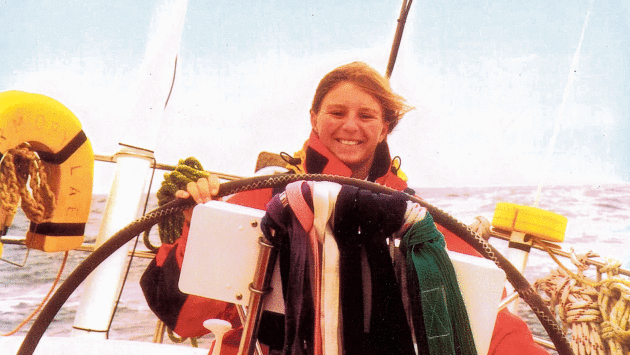
Charlotte at the helm of Thermopylae in 1997. Photo: Charlotte Drew/Wheatley
It was a great experience in many ways; sailing a big boat with a big crew, heading across the Atlantic for days on end in a watch system, being part of the whole event. But the lasting effect was that it enabled my relationship with my dad to evolve into an adult one, in which there was mutual respect and a new way of communicating.
My dad sailed across the Atlantic 19 times (including of course half the way in the Queen Mary 2 – see the internet for details!). He skippered around the world in the 1996 Clipper race and several legs in the 2005 race, he did the two-handed Round Britain and Ireland race five times and the Azores and Back race seven times, and sailed across the English Channel countless times (if only for cheap booze and fuel!).
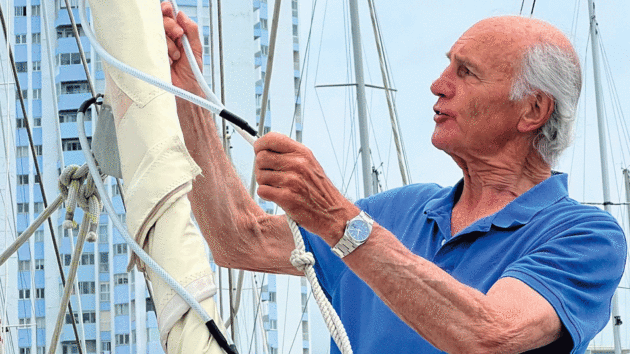
Aged 80, Mervyn gives a masterclass in spinnaker wrapping on Arethusa of Yealm. Photo: Charlotte Drew/Wheatley
He was one of a gang of friends, sailors and their partners, who grew up together in the 1970s and went on to do some great challenges and have a lot of fun; Robin Knox-Johnston, Clare Francis, Andrew (Spud) Spedding, Mike McMullen, Gerry Boxall, Martin Read, Richard Clifford, Philip Greig. He has helped many friends over the years, whether it be delivering a boat with them or giving handy hints to less experienced sailors at the start of a race.
Most of all, sailing taught us resilience. Our unofficial family ‘motto’ has evolved as – don’t worry until there’s something to worry about, don’t bother to panic because it won’t help, deal with the problem using all the resources and help around you, and then mull it over with your mates or family when you are fed, warm and have a drink in your hand!
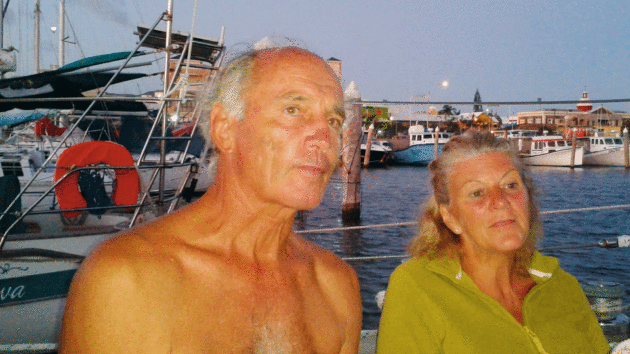
Despite claiming to hardly know how to sail, Penny Wheatley has travelled the world afloat. Photo: Charlotte Drew/Wheatley
Mervyn Wheatley – 5 things you never knew
Military background
After serving for 33 years as a Royal Marines officer, Mervyn skippered one of eight boats in the first Clipper Round the World Race in 1996 and also skippered several legs of the 05/06 race.
Amazing mileage
He has sailed over 260,000 miles in a variety of boats, including five Round Britain and Ireland races, eight solo AZAB (Azores and Back) races and two West Indies circuits.
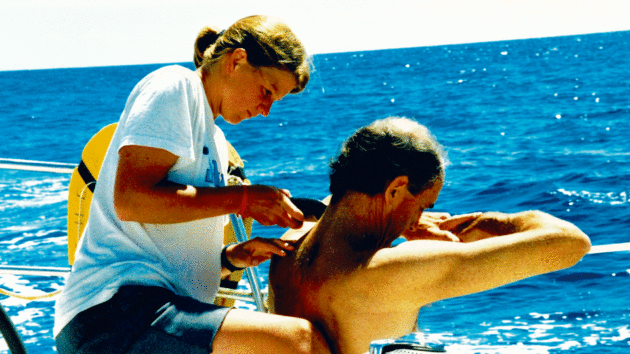
Domestic bliss aboard Thermopylae in 1997. Photo: Charlotte Drew/Wheatley
Ostar veteran
Mervyn is a veteran of five OSTAR races – the Original Single-Handed Transatlantic Race, a famous epic solo yacht race across the North Atlantic. Created in 1957 and first run in 1960, it covers roughly 3,000 miles from Plymouth, England, to Newport, Rhode Island.
‘Perfect storm’
Mervyn had to complete his last race on board Queen Mary 2 when he lost his beloved Tamarind in the OSTAR’s ‘perfect storm’ of 2017.
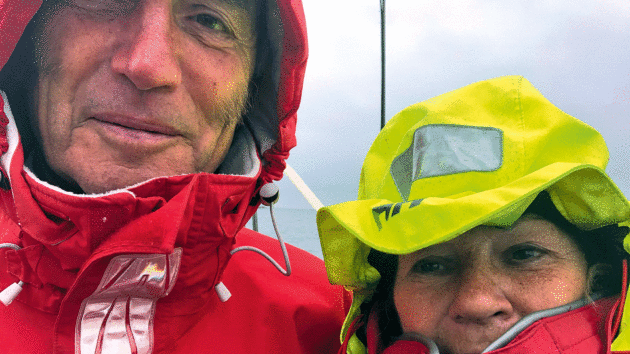
Not all plain sailing: Mervyn and Penny get ready to battle the elements in Brittany. Photo: Charlotte Drew/Wheatley
Still racing
He subsequently bought cutter rigged Bowman 40, Arethusa of Yealm, and raced solo in the 2019 MailASail AZAB aboard her.
Enjoyed reading this?
A subscription to Yachting Monthly magazine costs around 40% less than the cover price, so you can save money compared to buying single issues.
Print and digital editions are available through Magazines Direct – where you can also find the latest deals.
YM is packed with information to help you get the most from your time on the water.
-
-
- Take your seamanship to the next level with tips, advice and skills from our experts
- Impartial in-depth reviews of the latest yachts and equipment
- Cruising guides to help you reach those dream destinations
-
Follow us on Facebook, Twitter and Instagram.
Note: We may earn a commission when you buy through links on our site, at no extra cost to you. This doesn’t affect our editorial independence.