


The Limfjord cuts through Jutland from the North Sea to the Baltic. It is also a beautiful cruising destination in its own right
The wind is blowing hard from the west, as so often happens here. The widest part of the Limfjord, Livø Bredning, shines a deep dark blue colour, oscillating to greenish under the bright sun, interspersed with rapidly moving whitecaps. A nasty, short sea quickly builds up, but in the lee of the small island of Livø it is suddenly calm, the water as smooth as glass.
The harbour is tiny but there is only one other boat here – the summer holidays in Germany and Denmark have not yet begun.
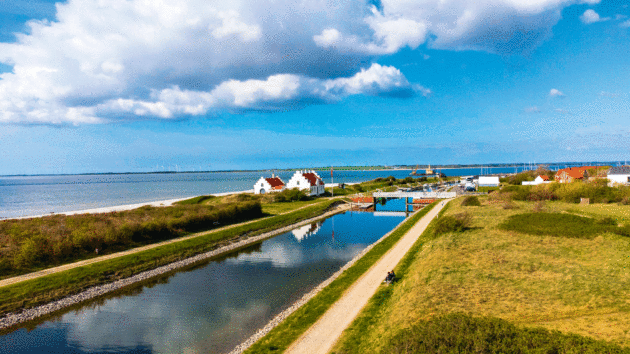
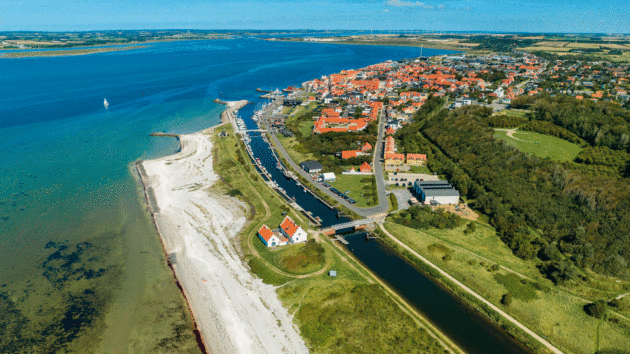
Historic buildings between Frederik VII’s Canal and the Limfjord now house a museum. Photo: Detlef Jens
The ferry arrives soon after us, but the total number of people on the island doesn’t change: two hikers with tents go ashore, an elderly couple board the ferry to sail back to the mainland. A few crates of cargo are pushed onto the pier, and the ferry is gone again. We can hardly imagine that it could ever get crowded here.
Wedding bells
‘But of course!’ exclaims the bearded man in the minute island shop. ‘We’ll soon host a wedding party of 120 guests!’ We pay him our harbour fee and discover a treasure in the fridge, namely a few bottles of Pinot Blanc from Alsace.
The bearded man is in a talkative mood, but we are probably the only customers that day and he is a good salesman. He congratulates us on the first-class wine and explains in great detail how they will decorate their island for the wedding, with colourful lanterns and a fireplace for the cosy evenings and everything that goes with it.
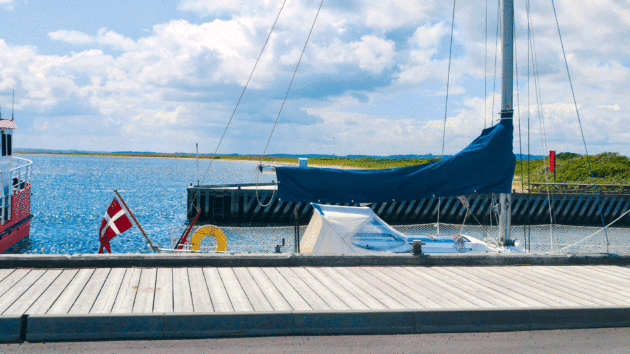
Livø harbour and beach are blissfully quiet outside of summer season. Photo: Detlef Jens
After all, they have 200 beds here on this island, all in the former hospital. The institution was once more of a rustic mental asylum, which is a bit of a black spot in the island’s history.
Later, there was a colony of artists and painters who wanted to set up an independent, self-sufficient island community in 1971. This sadly failed, not only due to their lack of practical experience in agriculture: the Danish state was also critical of their plans and had them expelled back to the mainland.
Apart from the wine and lots of the locally brewed Livø beer, there is hardly anything to buy in the shop. This may be different during the summer holiday season, but it is wise to have your boat well stocked with provisions, particularly if you want to avoid the region’s few larger towns and instead lose yourself in the many enchanting hidden bays and anchorages that make up this western part of the Limfjord.
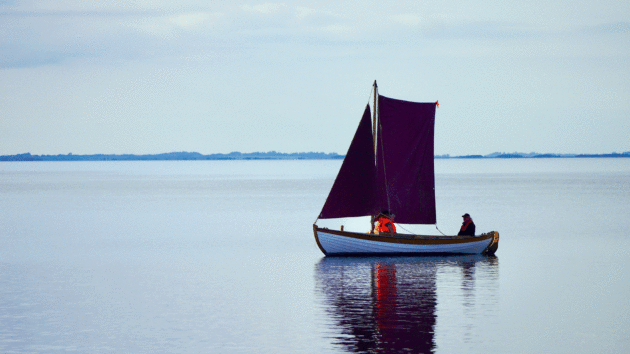
A traditional smakke jolle sailing off Løgstør. Photo: Detlef Jens
We came in from the east, from the Baltic Sea, on our way to the North Sea exit at Thyborøn. The quickest route if you use the Limfjord as a short cut – to avoid the longer sail around Skagen and across the notorious Jammerbugt – is through the Sallingsund, south of the Limfjord’s largest island, Morsø. The distance from Hals to Thyborøn is about 85 nautical miles on this route.
It could be done inside two long days, bearing in mind that most of the buoyage here is unlit. There are, however, leading lights through Sallingsund.
Despite this, I would not really recommend sailing after dark in these confined waters, unless maybe in a light and easy northern summer night during the month of June. In any case, rushing through this unique fjord in just a few days would not do this lovely micro cruising area any justice.
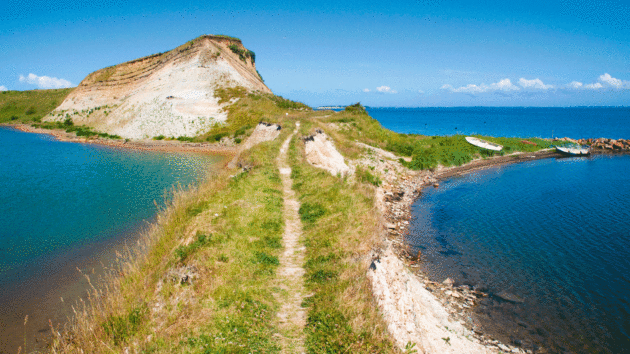
Northern Jutland can be wild and rugged. Photo: Detlef Jens
DRink it in
Having said this, the narrow eastern part of Limfjord is actually rather tedious. Hals itself is a typical holiday place, lively during the summer season but not that attractive otherwise.
For most yachts, the harbour only serves as a quick overnight stop when either entering or leaving the Limfjord and can be very tightly packed with boats. Should you arrive with a few hours of daylight left, it would certainly pay to carry on straight to Ålborg, another 20 or so miles on. After Copenhagen, Aarhus and Odense, this is Denmark’s fourth-largest city and has plenty going for it.
However, as I don’t drink spirits, only wine, Ålborg’s number one export, the world-famous Aquavit, leaves me rather cold. The same goes for the ‘Schnapps Route’, which leads once around the Limfjord, from one distillery to the next cosy inn, where you can then stay overnight, dine and, above all, taste the local, highly potent spirits in all their many varieties.
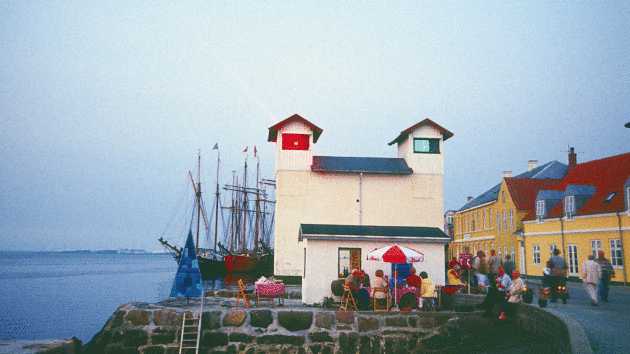
Løgstør main pier in the evening. Photo: Detlef Jens
We were more drawn to the street food hall in Ålborg, conveniently located on the pier at Skudehavn, a quaint municipal marina.
For anyone interested in design and architecture, the Utzon Centre is a real attraction. This is also located directly on the waterfront, but to the east of the two bascule bridges and more within taxi distance of Skudehavn.
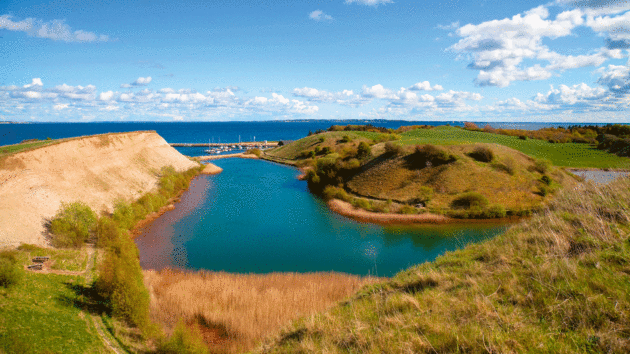
The small harbour on Jegindø, and its yacht basin. Photo: Bo Valentino / Alamy Stock Photo
The centre offers changing design exhibitions and displays the work of Jørn Utzon, the architect and sailor from Ålborg who, among many other iconic buildings, created the world-famous opera house in Sydney. His father, Aage Utzon, was famous as a yacht designer especially of the typical Danish Spitzgatter, double-enders, an example of which is also on display in the Utzon Centre.
About 25 nautical miles further west and you come to the small, old bascule bridge at Aggersund. In the prevailing westerly winds, you will probably motor most of the way as the fairway is narrow in places and quickly shallows on both sides. Once through the bridge, the fjord opens up in all its splendour and width.
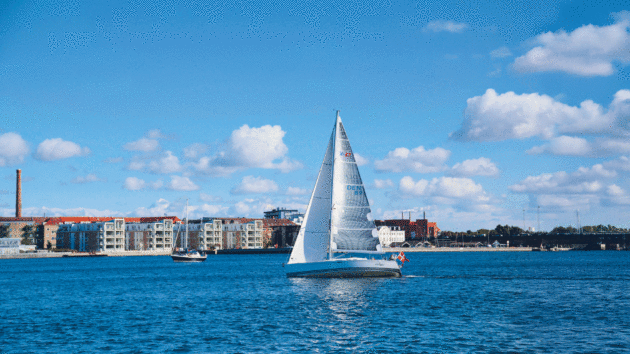
Ålborg is Denmark’s fourth largest city. It is the birthplace of the famous Aquavit spirit and Sydney Opera House architect Jørn Utzon. Photo: Oliver Forstner / Alamy Stock Photo
But be careful: there is an extensive shallow off Løgstør that has only been navigable since 1913 thanks to a dredged and buoyed fairway. Before that, a four-kilometre-long channel ran parallel to the coast, past the shallows.
Opened in 1861, it was named Frederik VII’s Channel but closed in 1913. Today, a small museum on the maritime cultural history of the Limfjord is located by the old channel. It includes a number of old, open fishing boats that have been restored and can be hired, to be sailed and rowed.
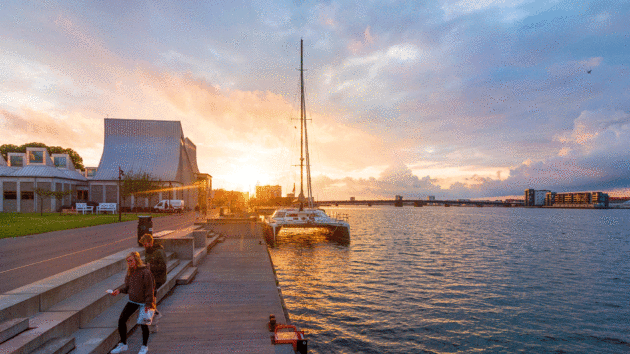
Ålborg. Photo: volkerpreusser / Alamy Stock Photo
Limfjord’s finest
Today, Løgstør is a pleasantly quaint place. Mooring is easy, either in the small yacht basin or in the entrance to the now disused canal. If anything, the fine views out across the beckoning waters of the wide ‘Løgstør Bredning’ can easily lure you on, and quite rightly so. This is the beginning of the best part of the Limfjord.
A trip around the island of Morsø, for example, is worthwhile, as is, of course, a visit to the aforementioned island of Livø, close to Løgstør. Rather than sailing through Sallingsund on the shortest route, we decide to pass north of Morsø and visit Thisted, a charming provincial town with a friendly yacht harbour. Unless very large, yachts are not encouraged in the commercial basin, and then only after making arrangements with the harbourmaster.
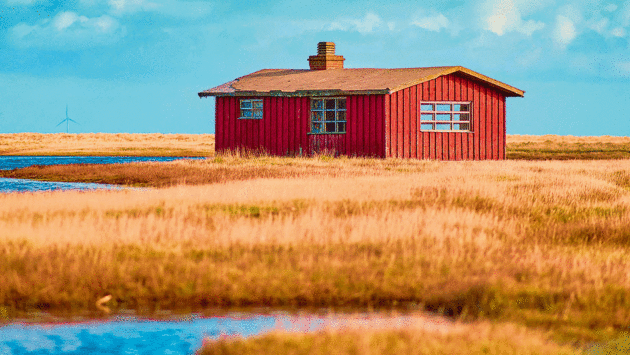
Splendid isolation is possible in the Limfjord. Photo: Florian Kunde / Alamy Stock Photo
Continuing south from Thisted, through the Vilsund lifting bridge, will take you into very scenic waters, with little bays surrounded by green meadows rolling down to the sea. This is pure picture-book Denmark at its best.
Even better, there are numerous potential anchoring spots, quite a few of them marked on the charts. But do take care, the water shallows rapidly in places. This also goes for some small boat harbours or jetties in the area, most of them restricted in depth to well under two metres.
Doverodde, however, has just a little more than two metres, at least at the head of the jetty. This is a truly magical bay in which to soak up the peaceful atmosphere. Ashore, the ‘Doverodde Købmandsgård’ is home to the Limfjord Centre, which has changing exhibitions, a café and a tower from which you can enjoy good views of the surroundings.
A little further on is the island of Jegindø, connected to the mainland by a fixed bridge which cannot be passed in anything other than a rowing boat. On the eastern side, however, is a large bay, good for anchoring in the prevailing westerlies, and a little harbour which is quite scenic, but has little else to offer. During our visit, a restaurant ashore was closed but being prepared for reopening.
Article continues below…
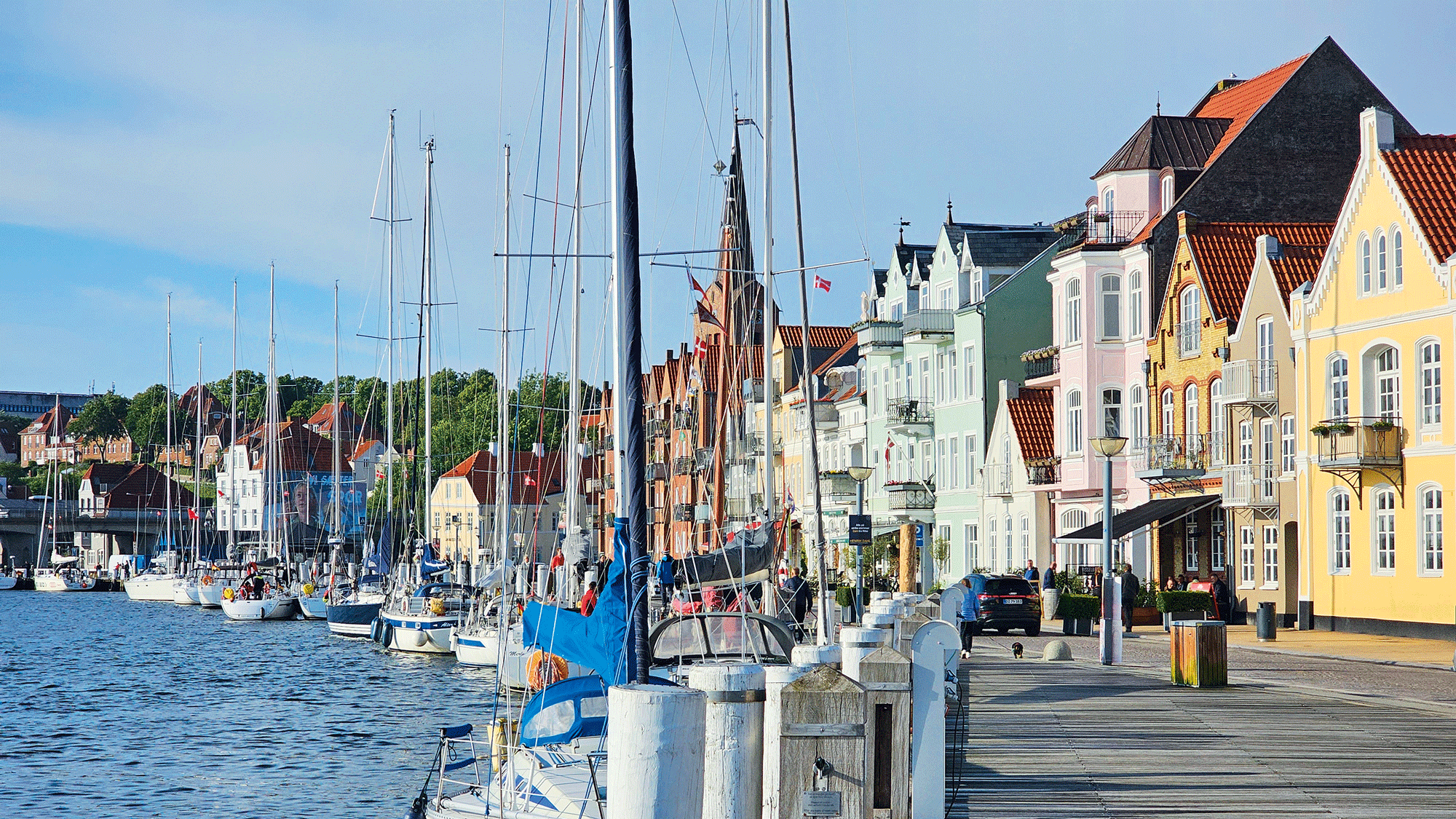
Zhik Spirit of Adventure: ‘We flew down the inner section of the fjord on a broad reach towards the Holnis narrows’
The Danish islands between Jutland, the continental part of Denmark, and Sweden had long been on my wish-list as a…
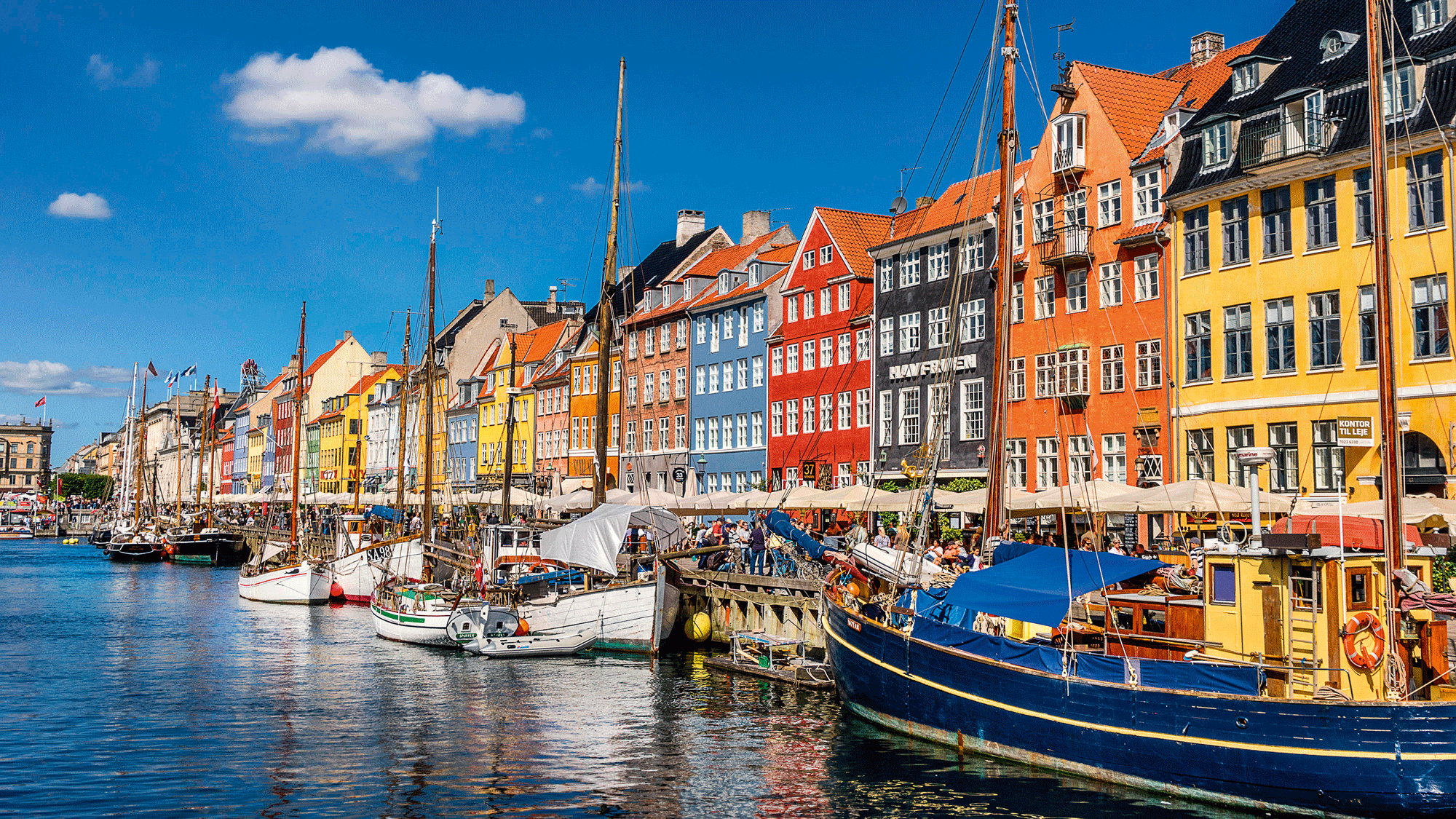
Cruising Copenhagen: ‘The water in the city centre is clean enough to swim in’
Sitting by the water on a hot summer’s day with a cool white wine in your hand? Even this can…

Sailing the Baltic Sea: where to go
Is the Baltic the new Mediterranean? Rachael Sprot takes a closer look at this underrated cruising ground
Hyggelig and history
Sailing around Jegindø’s southern tip will take you into another bay, to the south of the fixed road bridge, where you will find another little marina and the rather inconspicuous Tambohus Kro. But its interior is totally hyggelig, cosy in that inimitable Danish way, in a successful blend of tradition and modernity.
And it is Kongelig priveligeret, which means that the inn must have a certain history. The Danish kings and queens continued to grant special privileges to some Kros until well into the 20th century, including permission to distil spirits. The boat harbour only has a depth of about 1.5 metres; boats with more draught can anchor in the bay in front of the inn.
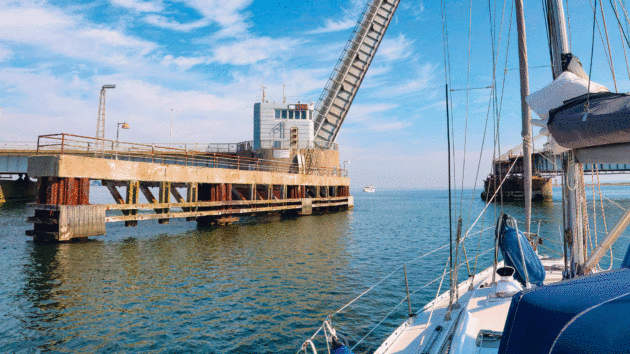
Passing through open Oddesund Bridge over Oddesund Strait. Photo: Tasfoto / Alamy Stock Photo
From Jegindø, rather than heading west towards the North Sea, a short detour back to the east, to Sillerslev, is nice. This is a former fishing harbour, with the eastern part now dedicated to yachts. Nature all around is great, with beautiful hiking trails along the rugged beaches and hilly coastline. And for those longing for more tropical surroundings, there even is a beach with ‘real’ palm trees!
More or less due east of Sillerslev, heading across Sallingsund to its southern bank, is the perfectly round natural harbour of Harre Vig, which is a continuation of Lysen Bredning. Enter only in daylight and sounding carefully, because the passage into the inner bay is narrow. But once inside there is a good five metres of water, ideal for anchoring in perfect all-round shelter and beautiful scenery.
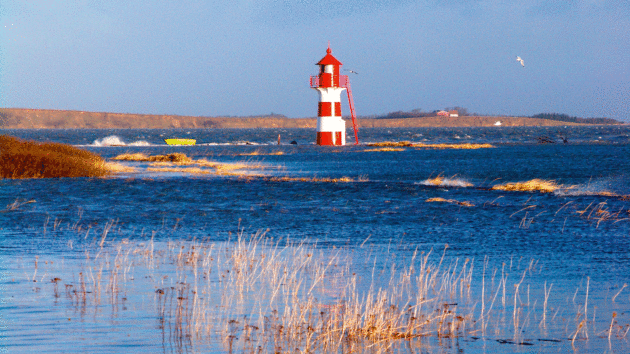
The distinctive Nord Oddesund lighthouse. Photo: E. Petersen / Alamy Stock Photo
Heading back west again, through the lifting bridge at Oddesund, the wide Nissum Bredning feels like a first taste of the North Sea. Before reaching Thyborøn, Lemvig is an attractive option, a pleasant little town with a large, well sheltered and friendly marina – a complete contrast to the rough fishing harbour of Thyborøn!
From Thyborøn, a deep and well marked channel finally leads out into the North Sea. Tidal currents can run hard and the passage out to sea, or coming in, will be dangerous to impossible in strong westerly winds.
Sorry darling
The fun restaurant Agger Darling in the small town of Agger at the northern end of the Nissum Bredning was strongly recommended to us by an excellent Danish cook who ran her own restaurant in the south of France for several years.
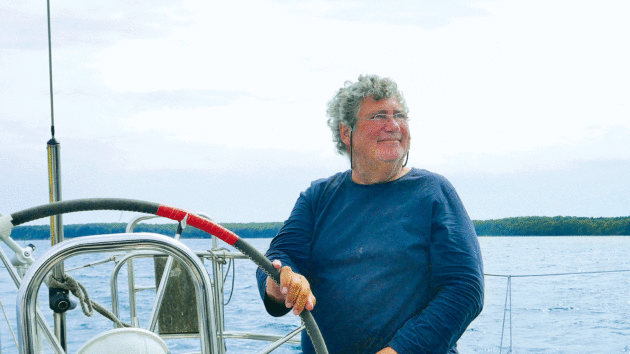
Detlef Jens has been sailing since childhood and spent many years living and working in the UK. Photo: Detlef Jens
However, my rendezvous with Agger Darling unfortunately had to be cancelled due to the weather. Agger, which lies north of Thyborøn on the narrow spit of land between the North Sea and Nissum Bredning, is accessed via a long and not very deep channel that tends to silt up. With a strong westerly wind, I was
a little uneasy about this with my boat drawing almost two metres, so we missed out on another interesting harbour.
On one side of Agger is the shallow Limfjord bay of Nissum Bredning, then come a few dunes, and then the open North Sea on the other side. The village is also a gppd spot for surfing, but the real deal in riding the waves is found a few miles up the beach to the north, in a spot dubbed ‘Cold Hawaii’.
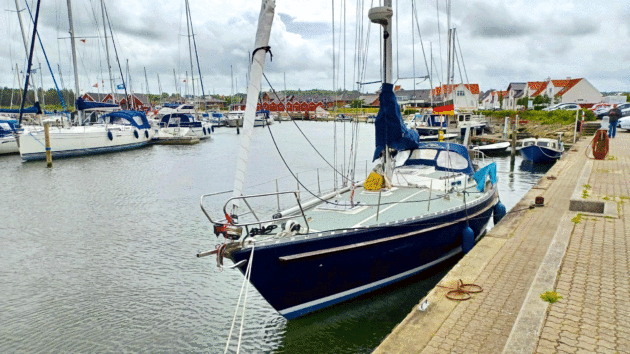
The friendly harbour at Glyngøre. Photo: Detlef Jens
Sailing north around Morsø as we did will probably let you miss out on Nykøbing, the capital of the Limfjord, so to speak. Nykøbing on Morsø is, like Thisted, a pleasant small town with good facilities and a large yacht harbour.
For those who use the Limfjord just for the passage from the Baltic to the North Sea, this is a strategic stop-over along the way. Much the same can be said of Glyngøre, which is more or less opposite, on the south bank of Sallingsund, which also has a friendly yacht harbour.
Essential Information
Charming and calming
The Limfjord lends itself as a ‘short cut’ from the North Sea to the Baltic, but the area is a beautiful cruising ground in its own right. A little rougher perhaps and more exposed to strong westerly winds than other regions in Denmark, but it is charming and not crowded. There are no particular difficulties, except that it is quite shallow in places. With a boat drawing just under two metres, one must be careful, but even so it is possible to explore the Limfjord extensively.
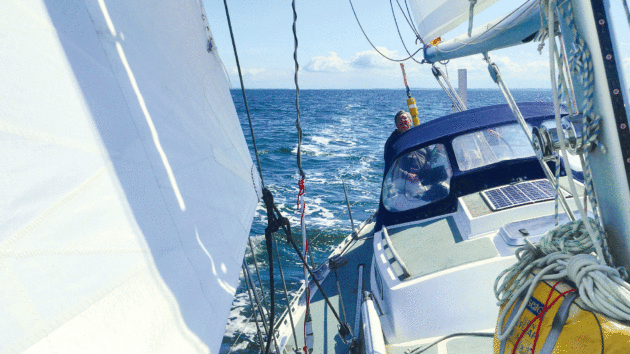
Photo: Detlef Jens
Look out for
Fish and mussel farms, marked by with small yellow buoys, are almost everywhere, but marked on current nautical charts. Buoyage is unlit, so it is
not advisable to sail at night.
Charts
Recommended nautical charts: NV Charts Series 9, Skagen to Rømø, Limfjord. This is all you need for the Limfjord itself. Tides have no effect once inside the Limfjord, but the water level can fluctuate by up to one metre, depending on the wind and the water levels in the North and Baltic Seas. This also creates currents that can be noticeable in some narrows.
Sightseeing
The area is rich in sights ashore; a tourist travel guide will give you the best information.
Enjoyed reading this?
A subscription to Yachting Monthly magazine costs around 40% less than the cover price, so you can save money compared to buying single issues.
Print and digital editions are available through Magazines Direct – where you can also find the latest deals.
YM is packed with information to help you get the most from your time on the water.
-
-
- Take your seamanship to the next level with tips, advice and skills from our experts
- Impartial in-depth reviews of the latest yachts and equipment
- Cruising guides to help you reach those dream destinations
-
Follow us on Facebook, Twitter and Instagram.
Note: We may earn a commission when you buy through links on our site, at no extra cost to you. This doesn’t affect our editorial independence.